Sustainability in the Industry

Household Appliances

Impacts, Risks and Opportunities

Sustainability in Household Appliances

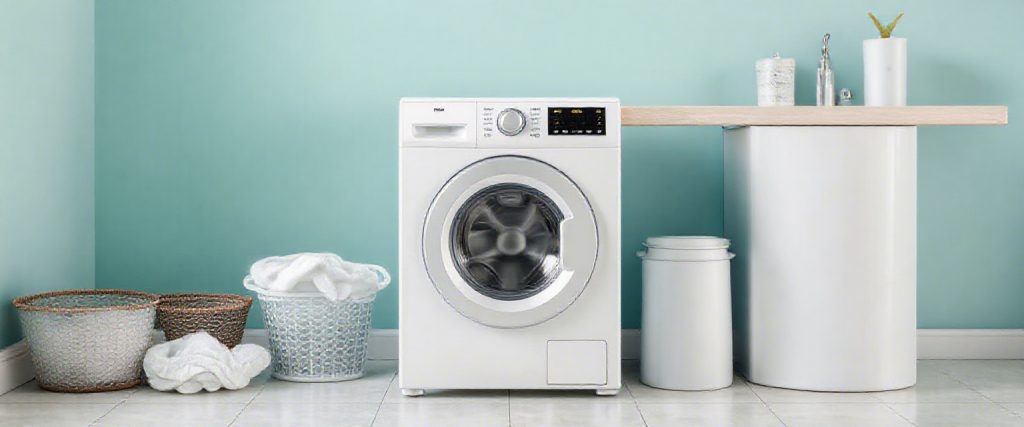
The energy consumption of “white goods” is often the largest item in the energy balance of households and commercial users such as restaurants. Whether it’s a refrigerator, stove, washing machine or dishwasher: devices run through, cause supposedly high energy peaks and are used hundreds of times a year. Although the energy efficiency in the sense of A+++ has specifically become better and better, at the same time the size of the devices has increased significantly: a classic rebound effect.

And the variety of electrical household appliances is also increasing: whether fully automatic coffee machines, food processors or juicers. Manufacturers therefore have an important role in the energy transition by designing devices to be smarter and more energy-efficient. It is also important to produce appliances more ecologically: washing machines with drum housings made from recycled PET bottles, refrigerator elements made from bio-plastic – manufacturers have long had circular products in their range.

Other fields include lower water consumption and the purification of wastewater. Intelligent technology such as automatic dosing programs help to save detergents and cleaning agents and protect the environment in the home. Circular business models are also coming into focus. Manufacturers contribute to this by making spare parts available in the long term and making repairs easier. Digital product passports and QR codes on the device give users tips on efficient use or where to find the nearest service provider for a repair. Refurbishment also contributes to extending life cycles. Adjusting screws for more sustainability with white control can also be found along the entire value chain. Social and ecological standards at supplier companies are just as important as reducing the use of resources and CO2 emissions in production and logistics through the use of renewable energy and emission-free transport. When it comes to packaging, large amounts of waste can be avoided if it is taken back and completely reused or recycled.

The industry includes, for example, the production of household appliances including “white goods”.

Industry Materiality

Key Fields and Topics in the Industry 


Sustainability is different by industry. Learn key material filed and topics in Household Appliances.


Climate

Climate protection

Resources

Circular economy

Value Chain

Supply chain

Society

End-consumers

EU NACE Classification 

Industry NACE Classes

Unsure if the industry is the right one? A comparison with the EU’s granular NACE classification Rev. 2.1 provides clarity.

Included NACE classes in the industry

C 27.5 Manufacture of domestic appliances
C 27.51 Manufacture of electric domestic appliances
C 27.52 Manufacture of non-electric domestic appliances
C 32.91 Manufacture of brooms and brushes

PROFILE PREVIEW 

Need more details?
Get the free company profile preview for your Industry

Request the free PDF and we will send it by email to you. 

Select the industry, the profile type and the required document language:

PROFILE CREATION

Create your company profile in Household Appliances

Select this industry and create your company profile to participate in industry ecosystems like the DNP.